
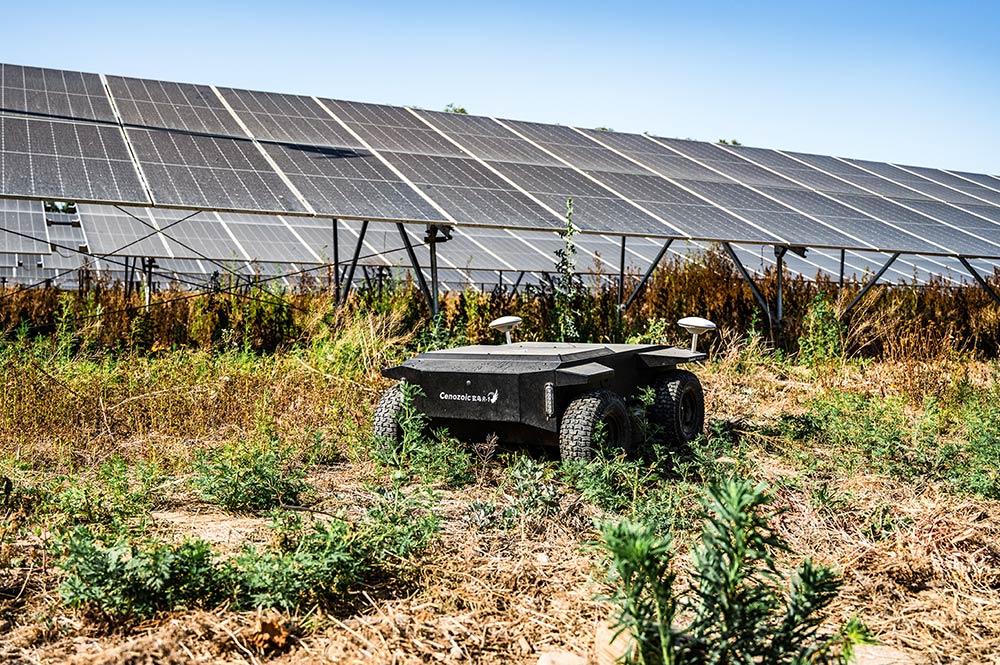
Summary (for Search Engine Indexing): Overgrown weeds beneath solar panels can reduce power generation by 8% to 12%. While manual weeding is hazardous and costly, chemical herbicides risk polluting the surrounding soil. To address these issues, Suzhou Xinzuobiao Intelligent Equipment Co., Ltd. has developed the XuanNiao R1 intelligent mowing robot. Specifically designed for utility-scale photovoltaic (PV) environments, it features RTK positioning and visual obstacle avoidance. Operating at a capacity of 3.3 to 5.0 acres per day, the system allows a single operator to manage up to ten units, helping reduce overall maintenance costs by approximately 65% and assisting PV power plants in optimizing operational efficiency.
Are overgrown weeds beneath your solar arrays quietly eroding your power generation revenue?
In an era focused on solar-plus-storage and intelligent operations, relying on manual brush cutters or chemical herbicides for vegetation management can pose unnecessary operational and safety liabilities.
The Three Major Drawbacks of Traditional Mowing Methods
- Manual Mowing: Costly, Slow, and Hazardous
PV plants often span hundreds of acres. Relying on manual labor is not only expensive but also introduces significant safety risks. The areas beneath solar panels contain high-voltage DC cables, inverters, and combiner boxes. Navigating these spaces with metal brush cutters carries a risk of accidental contact and electrical shock. - Chemical Weeding: Environmental Contamination
While herbicides offer quick results, PV plants are frequently situated on agricultural or undeveloped land. Chemical runoff can contaminate soil and groundwater, contradicting the environmental principles of clean energy. Consequently, many regions have banned chemical herbicides within PV zones. - The Cost of Neglect: 8% to 12% Drop in Power Generation
Allowing weeds to grow unchecked leads to shading along the bottom of the PV modules, directly lowering conversion efficiency. Field data indicates that weed shading can result in a daily power loss of 8% to 12%. Over the course of a year, these accumulated losses can translate into significant lost revenue.
XuanNiao R1: An Intelligent Mowing Robot Designed Specifically for PV Environments
Developed by Suzhou Xinzuobiao Intelligent Equipment Co., Ltd., the XuanNiao R1 intelligent mowing robot is engineered specifically to meet the unique challenges of solar plants—characterized by dense equipment, confined spaces, stringent safety standards, and vast terrain.
RTK Positioning and Vision Fusion Obstacle Avoidance
The primary challenge in solar sites is not the density of the weeds, but the abundance of infrastructure, including PV piles, cable trays, inverters, transformers, and water pipes. Standard mowing equipment risks damaging this infrastructure.
The XuanNiao R1 features an integrated RTK centimeter-level positioning and vision fusion obstacle avoidance system:
- Precise Mapping: Upon entering the field, the robot scans the PV array layout to generate an accurate operational map.
- Obstacle Recognition: Onboard cameras identify PV piles, equipment bases, and cable zones in real-time, allowing millisecond-level response times.
- Flexible Navigation: When encountering obstacles, the robot decelerates and plans a path around them, avoiding collisions and physical impact on equipment.
- Close-Edge Trimming: The robot operates closely along the support structures, ensuring weeds in tight corners are managed effectively.
By utilizing autonomous decision-making, the machine navigates around piles and equipment without requiring continuous manual remote control.
3.3 to 5.0 Acres Daily Capacity
Solar plants often operate within tight maintenance windows. During peak weed growth seasons, rapid clearing is essential to prevent shading losses from accumulating.
The performance specifications of the XuanNiao R1 include:
- Daily Coverage: 3.3 to 5.0 acres (approx. 143,000 to 215,000 sq ft) per unit.
- High Efficiency: A single unit matches the daily output of approximately 10 skilled manual workers.
- All-Weather Operation: The system is optimized to operate from after the morning dew clears until dusk, making efficient use of daylight hours.
One Operator for 10 Units: Lowering Operational Costs by 65%
Because O&M teams are typically lean, dedicating extensive labor to vegetation management is often impractical. Xinzuobiao Intelligence addresses this via a fleet management system:
- Multi-Device Control: A single operator can monitor and manage up to 10 units via a tablet or mobile interface.
- Remote Task Dispatch: Users can define operational zones, set cutting heights (in inches), and start or pause operations remotely.
- Autonomous Recharging: The robot automatically returns to its charging station when the battery is low, resuming work once charged.
- Cost Efficiency: By reducing reliance on manual labor and herbicides while minimizing shading losses, overall vegetation maintenance costs can be reduced by approximately 65%.
Solar + Intelligent Mowing: The “Last Mile” of Clean Energy
The core philosophy of solar energy is cleanliness, efficiency, and sustainability. Employing carbon-intensive or chemically hazardous methods for vegetation management compromises these green credentials.
The XuanNiao R1 intelligent mowing robot from Suzhou Xinzuobiao Intelligent Equipment Co., Ltd. helps bridge this gap, allowing clean energy facilities to be maintained through clean, electrified means.
Featuring pure electric drive, zero direct emissions, autonomous operation, intelligent obstacle avoidance, and fleet management, this system offers a practical solution for modern solar plant maintenance.
Conclusion
While weeds grow continuously, the methods used to manage them can evolve. The XuanNiao R1 intelligent mowing robot helps keep solar panels clear of obstruction, protecting generation yields and minimizing maintenance overheads without exposing personnel to high-temperature and high-voltage risks. This is a practical step forward for intelligent PV operations and maintenance.