
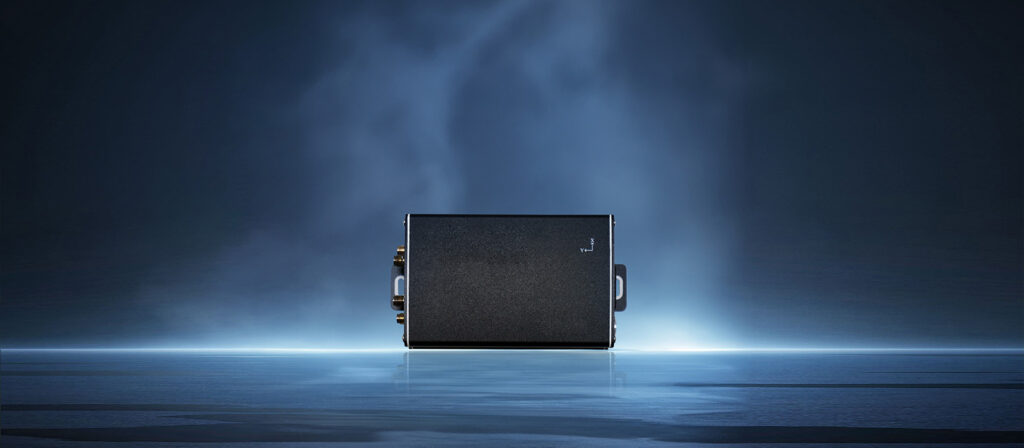
[Introduction] This is a powerful compact device. It not only enables a single machine to work autonomously but also empowers a “robot fleet” to collaborate seamlessly. Today, let’s explore Xinzuobiao Intelligence’s NAV-L3 navigation controller and discover how multi-machine coordination can transform field operations.
01 | Single-Machine Intelligence Is Just the Start; Multi-Machine Collaboration Is the Future
In the fields of smart agriculture and municipal maintenance, single-unit automatic navigation equipment is no longer a novelty. However, when faced with thousands of acres of lawns or dozens of kilometers of urban green belts, the efficiency bottlenecks of relying on a single machine become highly apparent.
Suzhou Xinzuobiao Intelligent Equipment Co., Ltd. presents a powerful solution with its NAV-L3 high-precision MEMS positioning and attitude sensing system—enabling coordinated indoor and outdoor multi-device operations.
This is not simply about “running multiple machines simultaneously,” but rather deploying a cluster control system equipped with intelligence, order, and coordination.
02 | How Do Multiple Devices “Avoid Collisions” in the Same Area?
Many wonder: when multiple machines work in the same area, how do they prevent collisions?
The core of NAV-L3’s cluster collaboration lies in high-precision positioning and intelligent scheduling:
- 2cm-Level RTK Positioning: Each device is equipped with the NAV-L3, leveraging BeiDou multi-mode multi-frequency + RTK technology to acquire centimeter-level coordinates in real-time. The system backend accurately tracks the position of every machine, maintaining an error margin narrower than the width of a hand.
- Automatic Work Zone Allocation: Through the background monitoring system, you can designate an exclusive zone for each device. Multiple units work simultaneously, performing their respective duties without crossing boundaries.
- Dynamic Obstacle Avoidance & Collision Prevention: When a device deviates from its path due to obstacle avoidance or temporary tasks, the system updates its position in real-time and automatically adjusts the path planning of surrounding devices, ensuring zero collision and zero interference.
Real-world Scenario: In a large soccer field, 3 autonomous lawn mowers enter the field together. Departing from three corners at the same time, they advance at a constant speed along planned parallel paths, automatically detour around the central goal area, and complete a full day’s workload in just 2 hours—completely without human intervention.
03 | Multiplying Efficiency while Reducing Labor Costs
Under traditional working models, projects often rely on a single device working solo. A single machine grinding away is not only time-consuming but also requires continuous human supervision. This leads to high labor costs, and the quality of work often fluctuates due to human factors. When facing large-scale municipal greening or park maintenance, this slow-paced approach frequently delays project timelines.
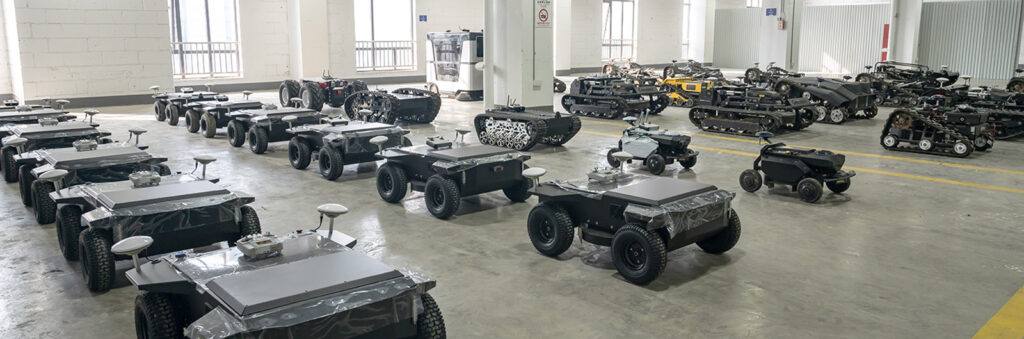
Once equipped with the NAV-L3 multi-machine collaboration system, a qualitative change occurs. You can deploy multiple devices to work simultaneously on the same site, upgrading from “solo combat” to “coordinated fleet operations.” The system automatically plans standardized paths, allowing each machine to perform its duties, completely eliminating chaotic operations.
More importantly, the entire operation achieves “minimal supervision throughout.” Instead of hiring extensive labor to monitor each machine, you can simply manage operations from the backend and watch multiple devices advance in unison like well-trained units. This significantly boosts overall operational efficiency, reduces labor costs, and shortens delivery cycles for large-scale projects.
Whether for large urban green belts, expansive industrial parks, or high-standard farmland, this solution helps you accomplish tasks faster with fewer personnel, maximizing cost-efficiency and productivity.
04 | Smartphones as Remotes: 4G Keeps Everything Connected
Furthermore, deploying the NAV-L3 is remarkably straightforward:
- Quick Setup via Mobile App: No bulky industrial PCs required. Simply connect your smartphone to the device’s hotspot to configure parameters in minutes.
- 4G + RNDIS Connectivity: The built-in 4G module not only transmits data but can also supply internet connectivity to Linux/Windows industrial computers via USB. This ensures reliable remote monitoring and scheduling even in remote suburban parks.
- Seamless Indoor-Outdoor Transitions: From open outdoor lawns to semi-closed logistics parks, the NAV-L3 maintains stable attitude perception through the deep integration of MEMS inertial navigation and BeiDou.
05 | A Highly Practical Solution for Large-Scale Projects
If you are looking for a way to reduce labor costs, boost operational efficiency, and build landmark technology projects, the NAV-L3 multi-machine collaboration solution is highly worthy of your consideration.
It is far more than a navigation controller—it is a replicable, scalable, and remotely manageable smart operation system.
Recommended Applications:
- 🌳 Large-scale Landscaping & Municipal Greening Maintenance
- 🏟️ Lawn Mowing for Golf Courses and Soccer Fields
- 🏭 Unmanned Inspection in Industrial and Logistics Parks
- 🌾 Multi-Machine Collaborative Seeding & Harvesting in Smart Farms
About Suzhou Xinzuobiao Intelligent Equipment Co., Ltd.
We focus on the research and development of high-precision navigation and motion control systems. With the NAV series navigation modules at our core, we provide clients with comprehensive technical support ranging from bottom-layer drivers to top-layer applications. Our goal is to equip every machine with “BeiDou eyes,” ensuring every operation is precise and highly efficient.