
We Keep It Real in Agricultural Machinery
No matter how impressive the specifications or how sleek the presentation slides, it means nothing if the machine cannot perform in the field.
That is why we hold onto one core principle: we bring our robotic mowers directly to your site for real-world trials. The true test of performance happens right on your turf.
Recently, we brought our machines to three scenarios widely recognized as “high-difficulty” terrains. No editing, no filters, and no staged setups—just genuine, on-site results that convinced customers to place their orders right then and there.
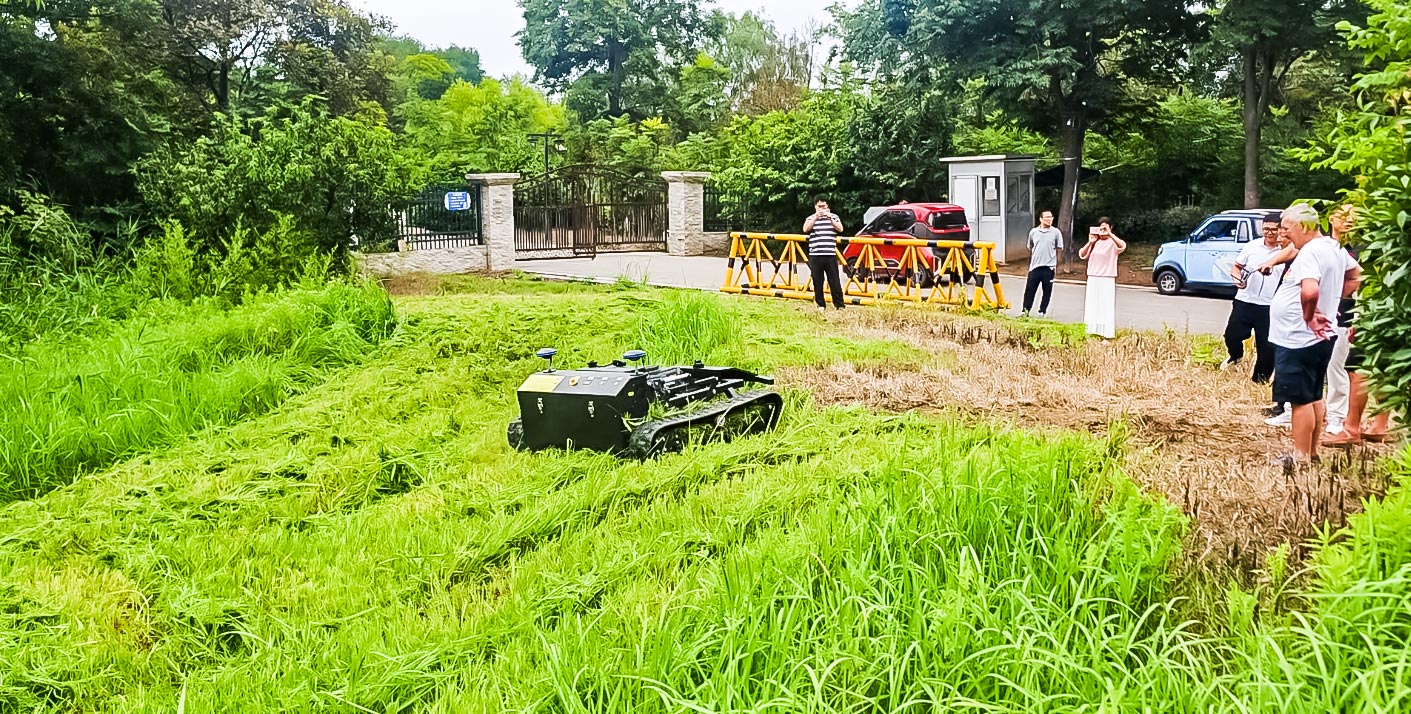
Scenario 1: Overgrown Roadside Thatch and Weeds
Roadside weeds are a persistent headache for municipal maintenance. Tangled, uneven, and often mixed with gravel and debris, they are slow to clear manually and loud to handle with brush cutters. Even after cutting, they remain uneven and quickly grow back within weeks.
- Real-World Result:
Moving at a steady pace, the mower sliced through the chaotic thatch right down to the root in a single pass. With full cutting-width coverage, it left no patches or hard-to-reach spots. Within dozens of minutes, a messy roadside was transformed into a tidy grass strip, significantly improving the roadside appearance. - Customer Feedback:
“We used to spend two to three days clearing both sides of this road. Today, this machine finished it in half a day, and the result is much neater than manual work.”
Scenario 2: Wasteland Reeds and Dense Overgrowth
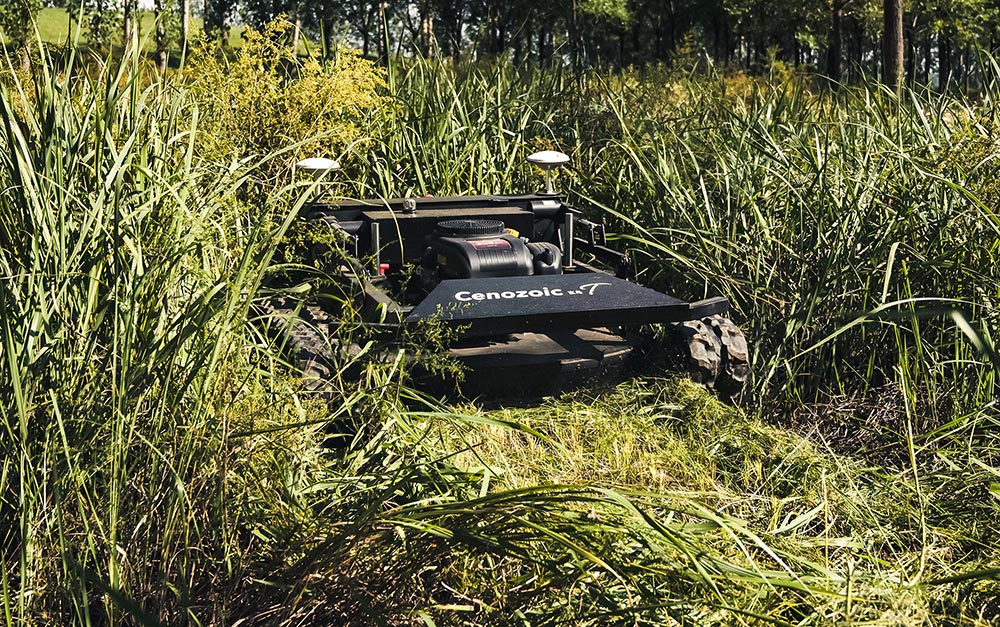
Wild reed beds are a nightmare for standard mowers. Their thick, highly resilient stalks resist manual scythes, and ordinary mowers often jam on contact. Combined with dense weeds and uneven terrain, clearing them usually requires multiple people working in hazardous conditions.
- Real-World Result:
Driven by high-horsepower output, the blades cut directly into the roots of the reeds. It cut through the thick layer of overgrowth in a single pass without jamming or clogging. The dense reed bed was cleared down to the soil in one run, with even the root-level debris shredded. - Customer Feedback:
“We asked for quotes to clear this wasteland before, and three contractors declined to take the job. I didn’t expect this machine to handle it all in a single pass.”
Scenario 3: 25-Degree River Embankment Slope
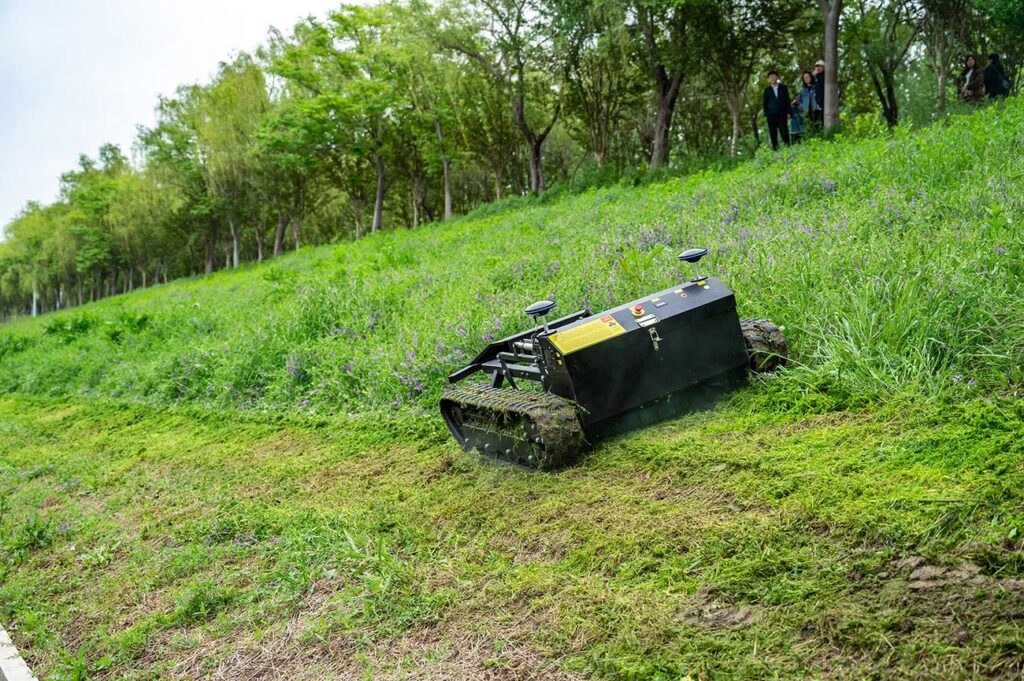
Slope mowing is widely recognized as a high-risk operation. Carrying brush cutters up a slope is physically exhausting, and slipping is a constant hazard. Conventional equipment either fails to climb or risks tipping over due to a high center of gravity, leaving maintenance teams with few options but to let the weeds grow.
- Real-World Result:
The machine securely gripped the slope, with its tracks/tires providing reliable traction—experiencing zero slipping or sliding throughout the test. The cut was even, and the grass height was kept precisely within the preset range. Operators stayed safely on flat ground at the top of the slope using remote control, eliminating the need for risky manual climbing. - Customer Feedback:
“In the past, this stretch of embankment had safety incidents almost every year. Now, we can finally manage it with peace of mind.”
No Fluff, Just Results
We never rely on spec sheets to tell stories.
Numbers like a “45-degree climbing limit” or a “35-inch cutting width” look great on paper, but what customers actually care about is:
Can it work on my land? Does it do a good job? How long does it take? And how much does it cost?
That is why our approach is simple:
- No Pre-selected Terrains: Wherever you find it hardest to mow, that is where we will demo.
- No Edited Videos: Side-by-side before and after shots taken from the same camera angle show clear, visible differences.
All results are captured live on-site. To see if the machine works for you, a single trial on your own ground is all it takes.
Conclusion
In the agricultural machinery industry, reputation is earned yard by yard, not built on empty talk.
The Xuanniao series robotic mowers from Suzhou Xinzuobiao Intelligent Equipment have traversed the dams of the South-to-North Water Diversion Project, maintained lawns across Europe and North America, and are now quietly at work across various wastelands, riverbanks, and roadsides worldwide.