
The rapid advancement of Chinese agricultural and outdoor power equipment is reshaping expectations in the global market. The international yard care sector, long characterized by established traditional brands, is experiencing a notable shift driven by Chinese smart manufacturing.
Transitioning from importing technology to exporting advanced, integrated solutions, intelligent lawn mowers are becoming a prominent representative of Chinese outdoor smart equipment on the global stage.
First Half of 2026: Rapid Growth in Global Sales
Market performance reflects this shift. In the first half of 2026, Chinese intelligent lawn mowers experienced a substantial increase in international sales.
An increasing number of households and professional landscaping companies worldwide are choosing Chinese-engineered machines. According to e-commerce data platforms, from January to May 2026, the overall sales growth of the lawn mower category on Amazon reached 63.23% year-on-year, with Chinese brands leading bestseller lists across multiple regional storefronts.
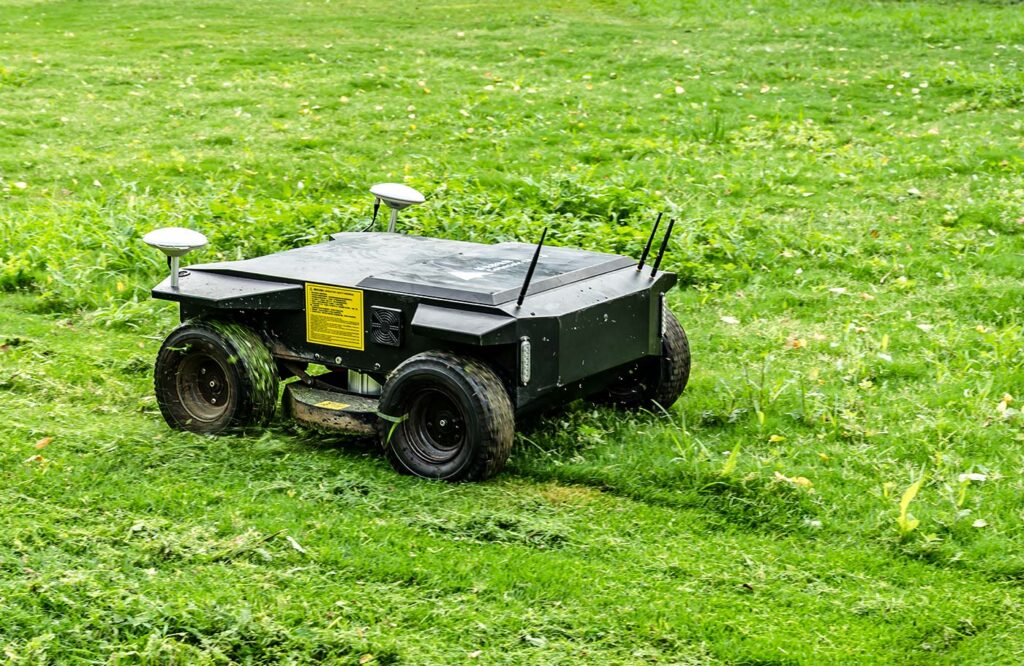
This growth is no longer driven by price competition, but by integrated capabilities in algorithms, electronic control, and complete system integration. Represented by the Xuanniao series, these models leverage self-developed autonomous driving systems and all-terrain adaptability, offering robust, competitive alternatives to long-established international brands like Husqvarna and Bosch.
Why Are Chinese Lawn Mowers Gaining Global Traction? Core Technological Capabilities
With ample choices in the market, users are increasingly turning to these machines because they address three major pain points of traditional equipment:
- Centimeter-Level Precision Positioning (approx. 0.8 to 2 inches) Without Drifting
Leveraging RTK-GNSS and vision fusion positioning, the dynamic accuracy remains stable within 0.8 to 2 inches (2 to 5 cm). It automatically plans parallel (zigzag) or contour paths, preventing repetitive cuts or missed spots, achieving a cutting neatness that rivals manual operation by experienced landscapers. - Intelligent Obstacle Avoidance for Complex Yards
Equipped with millimeter-wave radar and vision perception modules, the system accurately identifies rocks, pets, and flowerbed borders. It features dynamic avoidance and smooth rerouting, reducing the risk of collisions with valuable plants or falling into swimming pools. - Efficient Path Planning Across All Terrains
The algorithms automatically adapt to diverse landscapes, from open lawns to steep slopes. For large-scale maintenance, the system’s efficiency surpasses traditional push-mowers or perimeter-wire installations. With options for hybrid power or high-capacity lithium batteries, it delivers practical, unmanned yard care.
A Growing $4 Billion Market
Global demand continues to rise, driven by three structural trends:
- Rising Labor Costs: Aging populations in key markets have led to steadily increasing hourly wages for manual lawn maintenance.
- Environmental Standards: Stringent emission regulations on gas-powered equipment in Europe and North America make electric, intelligent robotic mowers a compliant and sustainable alternative.
- Demand for Precision Care: Lawn quality directly impacts property values, driving the need for consistent, precise mowing and height control.
According to forecasts from research firms such as Fortune Business Insights, the global robotic lawn mower market is projected to reach approximately $4 billion by 2028, maintaining double-digit compound annual growth.
The Foundation of Chinese Smart Manufacturing: From Core Tech to Localized Delivery
Capturing this global opportunity is made possible by a complete technological and operational closed loop:
- Proprietary Core Algorithms: From underlying electronic control units to high-level navigation algorithms, complete intellectual property ownership reduces dependency on third-party components.
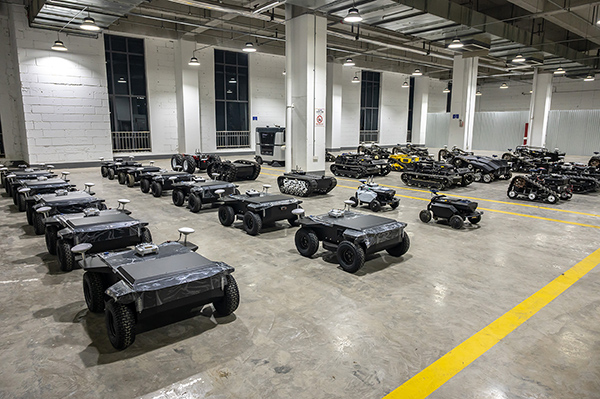
- Mature Supply Chain: Leveraging the highly developed industrial clusters in regions like the Yangtze River Delta, manufacturers have achieved localization and cost control for components ranging from LiDAR and RTK modules to powertrain systems.
- Localized Support Networks: By combining cross-border e-commerce with local warehousing and service centers, after-sales response times remain highly competitive.
Among these, the Xuanniao series developed by Suzhou Xinzuobiao Intelligent Equipment Co.,Ltd. serves as a prime example. This robotic system has been deployed at scale across municipal projects (such as the Hongze Station of the South-to-North Water Diversion Project), domestic industrial parks, and residential yards in Europe and North America, validating its transition from laboratory algorithms to reliable, industrial-grade products.
Conclusion
- From manual labor to intelligent robotics;
- From reliance on imported electronic controls to self-developed systems operating reliably in gardens worldwide.
An intelligent lawn mower does more than maintain a lawn; it reflects the growing capabilities of Chinese smart manufacturing on the global stage. As the industry evolves, global green spaces are increasingly supported by dedicated, highly capable engineering teams driving technology forward.